Ep 21 | Redefining Sexual Medicine and Education for Midlife Women with Dr. Rachel Rubin

Imagine a doctor's office where you're handed a mirror instead of a paper gown, and the word 'pleasure' is used more often than 'problem.'
This isn't a fantasy - it's the reality Dr. Rachel Rubin is creating for midlife women seeking answers about their sexual health.
I had the pleasure of sitting down with Dr. Rachel Rubin, a board-certified urologist and sexual medicine specialist who's on a mission to revolutionize how we approach sexual health for midlife women.
The Crisis in Women's Sexual Health Care
Dr. Rubin opened my eyes to a startling reality: the field of sexual medicine is facing a crisis. Despite the fact that sexual health is a crucial aspect of overall wellbeing, it's often overlooked or dismissed by the medical community.
"For many women entering our 40s, there is a common symptom that many are reporting - "Not Feeling Like Myself," a group of symptoms that medical research is calling NFLM," Dr. Rubin shared. It is the feeling of not being comfortable in our own skin, anxiety, overwhelm, low mood and loss of libido - a sentiment that resonates with so many of us as we navigate the changes of perimenopause and menopause.

Breaking Down Barriers in Medical Education
One of the most shocking things I learned from Dr. Rubin is the lack of education in medical schools about menopause and sexual health. She emphasized, "There is literally, none! And it's important because menopause is not just an issue for your 50s. It's not just an issue for your gynecologist. It's important that ALL physicians learn about this life stage."
This gap in knowledge has led to a situation where women are often left feeling unheard and unsupported when it comes to their sexual health concerns.
The Genitourinary Syndrome of Menopause: More Than Just Dryness
Dr. Rubin broke down the complex issue of Genitourinary Syndrome of Menopause (GSM) in a way that made so much sense. It's not just about vaginal dryness – it's a whole constellation of symptoms that can significantly impact quality of life.
"What happens is as the hormones start to change, and this can happen as soon as your late 30s... The genitals can shrink and thin out, they can get dry, and you lose the acidity of the vagina that helps fight infection."
This change can lead to a host of issues, from painful sex to increased risk of urinary tract infections. But here's the good news – there's a solution that many women aren't being offered.
The Game-Changer: Vaginal Estrogen
Dr. Rubin passionately advocated for the use of vaginal estrogen, calling it "essentially female Viagra." She explained, "Vaginal hormones, either vaginal estrogen or vaginal DHEA, is essentially female Viagra. Why? Because it helps with sex and it prevents urinary tract infections. So it's even better than Viagra."
Despite its effectiveness and safety, many women aren't being offered this treatment due to misunderstandings and outdated FDA warnings.
Key Takeaways on Vaginal Estrogen:
Safe for most women, including those with a history of cancer or blood clots
Can significantly improve sexual comfort and reduce UTI risk
Current FDA warnings are outdated and not based on recent scientific evidence
In my personal opinion, Vaginal Estrogen is the GOLD standard of vulvo-vaginal health.
When I went into menopause five years ago, no one told me it would cause so many uncomfortable and embarrassing symptoms. Here's a video I posted on Instagram to share my own personal story:
The Clitoris: The Forgotten Organ
Our conversation took an fascinating turn when we discussed the clitoris. Dr. Rubin, who proudly calls herself a "clitorologist," shed light on this often-overlooked part of female anatomy.
"The clitoris has been completely ignored by science and medicine, and we're just starting to wake up and say, wait a minute, why don't we know anything about this?" she explained.
Did you know that the clitoris has 10,000 nerve endings, and its sole function is to provide pleasure? It’s also made of erectile tissue, just like the penis. Interestingly, most of the clitoris is internal, with only a small portion visible from the outside—what we see is just the tip of the iceberg. These facts have the power to revolutionize how we think about and experience pleasure.

Empowering Women Through Knowledge
One of the most powerful messages from my conversation with Dr. Rubin was the importance of self-knowledge. She encourages all her patients to use a mirror to examine their own anatomy, and I wholeheartedly agree with this practice.
"How can you advocate for yourself? How can you experience maximal pleasure with your partner? How can you even know what to ask the doctor if you don't even know what is going on down there?" Dr. Rubin pointed out.
Action Steps for Sexual Health Empowerment:
Use a mirror to familiarize yourself with your anatomy
Learn the proper names for your body parts
Don't be afraid to discuss sexual health concerns with your doctor
Consider exploring resources like vaginal estrogen if you're experiencing GSM symptoms
Remember that pleasure is your birthright – don't hold back from seeking it
Advocating for Better Care
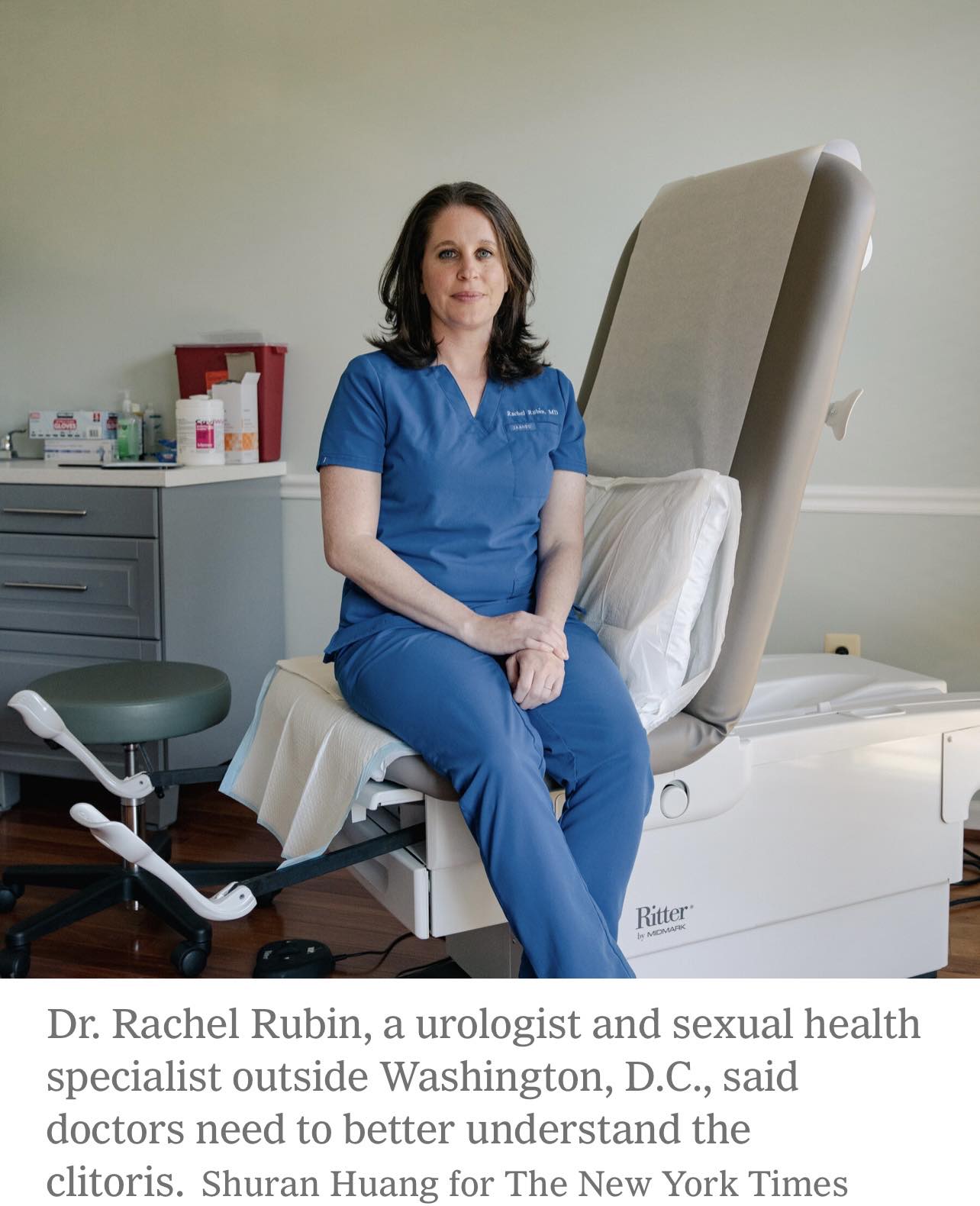
Dr. Rubin is doing incredible work to change the landscape of sexual medicine, but we all have a role to play. She encourages women to be vocal about their needs and to seek out knowledgeable providers.
"We must empower women to know that they deserve to care about what's important to them, and it is not for us doctors to tell you what you should care about," she emphasized.
Women who travel across the country to visit Dr. Rubin, "don't come for a little problem... they come for an issue they deeply care about and so they are willing to invest their time and resources to get the best sexual medical care and expertise," she adds.
Conclusion: Embracing Pleasure and Connection
As we wrapped up our conversation, I asked Dr. Rubin what pleasure means to her: "Pleasure to me, is deep connection. I love to deeply connect with people."
This, I believe, is at the heart of why sexual health is so important. It's not just about physical sensations – it's about connection, intimacy, and living fully in our bodies at every stage of life.
My conversation with Dr. Rubin left me feeling inspired and empowered. It's clear that we're at the cusp of a new era in women's sexual health, and it's up to all of us to keep pushing for better education, better care, and a fuller embrace of our sexual selves.
Remember, your pleasure matters. Don't be afraid to speak up, ask questions, and seek the care you deserve. Here's to redefining sexual medicine and education for midlife women – and to embracing all the pleasure and connection that comes with it.
About our guest: Dr. Rachel S. Rubin is a board-certified urologist and sexual medicine specialist. She is one of only a handful of physicians with fellowship training in sexual medicine for all genders. Dr. Rubin is a clinician, researcher, and passionate educator. In addition to being the former education chair and current Director-at-Large for the International Society for the Study of Women’s Sexual Health (ISSWSH), she serves as associate editor for the journal Sexual Medicine Reviews.
Website: https://www.rachelrubinmd.com/
Instagram: https://www.instagram.com/drrachelrubin
LinkedIn: https://www.linkedin.com/in/rachel-rubin-7433b0134/
RECOMMENDED RESOURCE:
FREE Pleasure Upgrade Bundle
Are you ready to awaken your sensuality and feel more empowered in your body? Get the Pleasure Upgrade Bundle now!
7-Day Pleasure Body Journal + Guided Visualization + Pleasure Checklist
Exclusive VIP 1-on-1 Coaching: Your Personal Pleasure Revolution
A Powerful 3-Month Journey with Gabriella Espinosa to Reawaken Your Sensuality, Reclaim Your Power, and Revolutionize Your Intimate Life
Limited to just 5 clients per quarter - Reserve your spot now!